If you are tired of crowded destinations where every experience feels rushed and artificial, Bosnia and Herzegovina will surprise you. Here, you still find places where nature feels untouched, rivers run wild, and villages keep their traditional rhythm of life. The challenge is not what to do, but how to choose from so many real experiences.
From wild rivers and mountain canyons to historic cities and remote villages, this Balkan country offers a mix of adrenaline, nature, and history that is difficult to find elsewhere in Europe. Whether you want to explore the mountains of Sutjeska National Park, raft through the Tara River Canyon, or walk the old streets of Sarajevo and Mostar, there is no shortage of unforgettable experiences.
Here are the top 10 activities to do in Bosnia and Herzegovina, starting with one of the most exciting canyoning adventures in the Balkans.
1. Experience Hrčavka canyoning in Sutjeska National Park
If you are searching for the ultimate outdoor adventure in Bosnia and Herzegovina, Hrčavka canyoning should be at the top of your list.
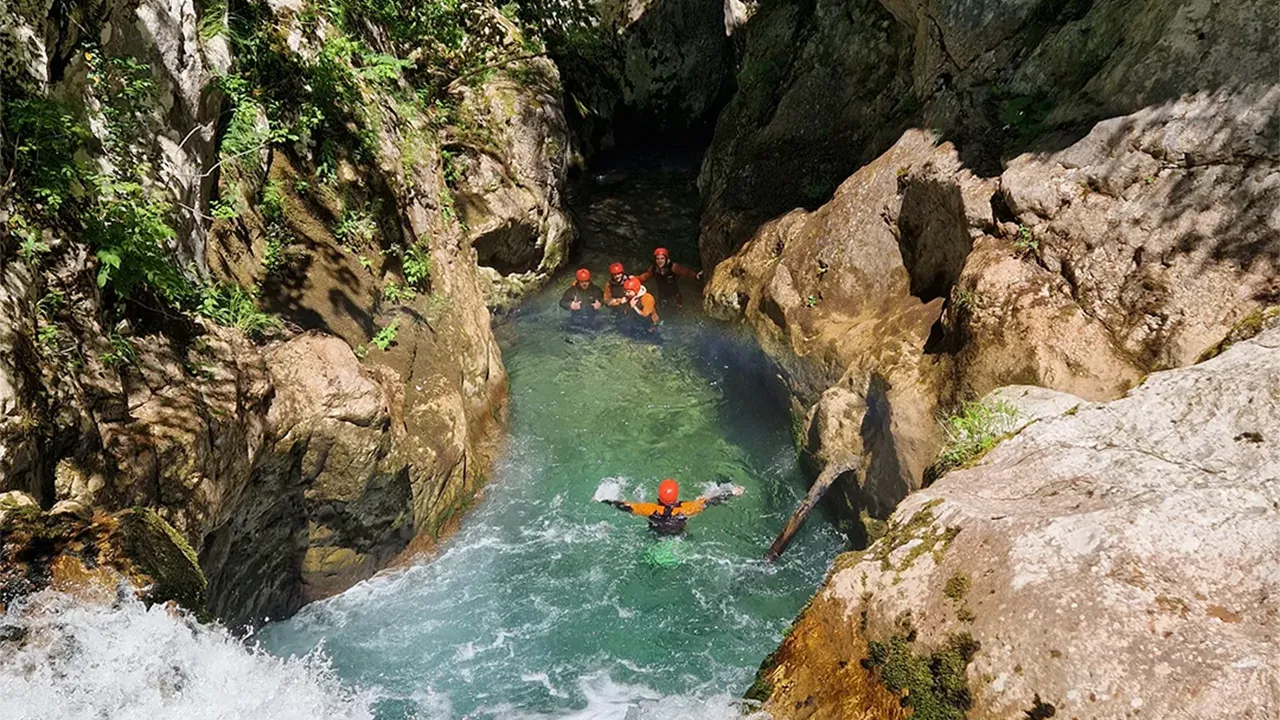
Located deep inside the mountains of Sutjeska National Park near Foča, the Hrčavka River cuts through a dramatic limestone canyon filled with waterfalls, narrow passages, natural pools, and steep rock walls. Parts of the canyon remain completely untouched, creating an experience that feels raw, remote, and wild.
Unlike ordinary hiking trails, canyoning in Hrčavka combines swimming, climbing, jumping, hiking, and rappelling into one adventure. Inside the canyon, sunlight barely reaches the narrow stone walls while cold mountain water rushes beneath your feet.
The canyon route is approximately 2 kilometers long and usually takes around 3 to 5 hours to complete. Along the way, visitors descend waterfalls using ropes, slide down smooth natural rock formations, and jump into crystal-clear pools surrounded by towering cliffs.
The experience is suitable for beginners with good physical condition because all tours are led by experienced certified canyoning guides using professional safety equipment.
For travelers who want a true adrenaline experience in the Balkans, Hrčavka canyoning is one of the most unforgettable things to do in Bosnia and Herzegovina.
2. Go whitewater rafting on the Tara River
The Tara River Canyon is one of the most famous outdoor destinations in Southeast Europe and a must-visit for adventure lovers.
Known for its emerald-green water and powerful rapids, the Tara River offers some of the best whitewater rafting in the Balkans. The most popular rafting route starts near Brštanovica and takes visitors through dramatic canyon scenery surrounded by dense forests and steep cliffs.
Depending on the season and water level, rafting on the Tara can range from a relaxing scenic ride to a high-adrenaline experience filled with fast rapids and waves.
Many travelers combine rafting with canyoning or hiking tours in Sutjeska National Park to create a multi-day outdoor adventure in the Foča region.
Summer is the most popular season for rafting, while spring usually brings stronger rapids and more intense conditions.
3. Climb the Red Rocks Via Ferrata on Romanija Mountain
For travelers who enjoy heights and mountain landscapes, the Red Rocks Via Ferrata on Romanija Mountain offers another exciting challenge.
A via ferrata is a protected climbing route equipped with steel cables, metal steps, and safety anchors that allow visitors to safely move across steep rock faces while secured with climbing gear.
The Red Rocks route includes exposed cliff sections and panoramic viewpoints overlooking forests, valleys, and the surrounding mountains of eastern Bosnia and Herzegovina.
Even visitors without previous climbing experience can enjoy the route with proper equipment and guidance.
4. Hike through Perućica primeval forest
Inside Sutjeska National Park lies one of Europe's last primeval forests, Perućica.
This forest is dense, quiet, and untouched. Trees grow extremely tall, fallen trunks stay where they fall, and nature follows its own rhythm.
Perućica is home to more than 170 species of trees and shrubs, and over 1,000 plant species.
A highlight of the area is Skakavac waterfall, which drops about 75 meters into a deep green valley.
Access to the heart of the primeval forest is only possible with a licensed guide, which helps protect the ecosystem and keeps visitors safe.
5. See Štrbački Buk waterfall and raft the Una River
The Una River rafting experience takes you through one of the most beautiful sections of Una National Park, where crystal-clear rapids, forested canyon walls, and natural pools create a continuous flow of untouched nature. The river is known for its vibrant turquoise color and fast-moving water, making it one of the most scenic rafting routes in Bosnia and Herzegovina.
One of the main highlights along this route is the powerful Štrbački Buk waterfall, where the Una River cascades over natural tufa barriers, forming a dramatic series of waterfalls surrounded by dense greenery. The sound of rushing water and the raw force of the river make this spot one of the most impressive natural sights in the country.
The river continues through a landscape shaped by limestone and tufa formations, creating a mix of waterfalls, cascades, and calm turquoise pools that change with the season.
For visitors exploring the area on foot, well-maintained wooden paths and viewing platforms make it easy to move through the surroundings and enjoy different perspectives of the waterfall and river canyon. These viewpoints are especially popular for photography, as they offer clear angles of the cascades and surrounding forest.
The area is particularly striking in spring, when snowmelt increases the water flow, making the river stronger, louder, and more dynamic. This is when Štrbački Buk is at its most powerful and visually impressive.
Geographically, Štrbački Buk is located in the northwestern part of Bosnia and Herzegovina, within Una National Park, close to the town of Bihać, near the border with Croatia.
6. Visit Blagaj Tekija and the Buna spring
Near Mostar, you will find Blagaj Tekija, a historic Dervish monastery built at the base of a dramatic limestone cliff, right where the Buna River begins. This complex was originally home to Sufi dervishes, who lived in seclusion and practiced spiritual rituals in complete harmony with nature. The setting was chosen very intentionally, as the silence of the cliffs and the power of the water create a strong sense of calm and isolation.
Next to the monastery is the Buna spring, one of the strongest karst springs in Europe. Here, water emerges directly from a deep cave system inside the rock face, forming an intense natural outflow that immediately becomes a calm, turquoise river. The contrast between the hidden force of the spring and the peaceful surface of the river is what makes this location so unique.
The site combines:
- Spiritual heritage, connected to centuries of Sufi tradition
- Ottoman-era architecture, preserved in its original stone and wood design
- Natural beauty, where cliff, water, and greenery meet in one space
Today, Blagaj is also a place where you can slow down after exploring Mostar. Small riverside restaurants serve traditional Bosnian coffee and fresh fish, allowing you to sit right next to the water and listen to the steady flow of the spring.
7. Walk through Lukomir mountain village
High in the Bjelašnica Mountains, at 1,495 meters above sea level, sits Lukomir, the highest and one of the most remote traditional villages in Bosnia and Herzegovina. The journey to reach it already feels like part of the experience, with winding mountain roads opening into vast landscapes and deep views over the surrounding peaks and canyons.
The village is known for its distinctive stone houses with wooden roofs, designed to withstand harsh mountain weather. These homes are built from local materials, and their simple structure reflects a way of life that has changed very little over time. Around the village, open pastures stretch toward the edge of the Rakitnica Canyon, one of the deepest and most dramatic canyons in the country.
Life in Lukomir is closely tied to the rhythm of nature. Locals still practice traditional livestock farming, mainly sheep herding, and produce homemade dairy products such as cheese and yogurt using old methods passed down through generations. In summer, you can meet local families, try simple mountain food, and experience a quiet lifestyle far removed from city noise.
For visitors, hiking routes leading to Lukomir are one of the main attractions. Trails from Bjelašnica and Rakitnica canyon viewpoints offer panoramic scenery, with wide-open skies and rugged mountain terrain that feels untouched and raw.
8. Explore the Sarajevo old town
Sarajevo is a city where East and West meet in a very visible and lived-in way. Ottoman, Austro-Hungarian, and modern influences sit side by side, shaping a city that feels layered rather than uniform. Every street tells a different part of its history, and the contrast is part of what makes it so interesting to explore.
In Baščaršija, the old Ottoman bazaar and heart of the city, narrow cobblestone streets are filled with small craft workshops, traditional food spots, and coffee houses that have been serving locals for generations. The sound of metalwork, the smell of fresh bread, and the rhythm of daily life create an atmosphere that feels both busy and timeless.
Some of the key landmarks you can explore in Sarajevo include:
- Latin Bridge, historically significant as the site connected to the start of World War I
- Traditional mosques, churches, and synagogues, often located within a short walking distance of each other
- Authentic Bosnian coffee houses, where coffee is served slowly, traditionally, and without rush
Sarajevo is not a city to rush through. It is best experienced on foot, at a slower pace, allowing you to move naturally between neighborhoods, stop for coffee, and absorb the mix of cultures that define everyday life here.
9. Visit Mostar and Stari Most
Mostar is one of the most recognizable cities in Bosnia and Herzegovina, best known for its iconic Old Bridge, Stari Most, which spans the emerald-green waters of the Neretva River. Built in the 16th century during the Ottoman period, the bridge is an architectural landmark that connects the two sides of the old town and represents a powerful symbol of connection between cultures.
After being destroyed during the conflict in the 1990s, Stari Most was carefully reconstructed using traditional techniques and reopened in 2004. Today, it stands not only as a historic monument but also as a symbol of resilience and recovery, recognized globally for its cultural importance.
In the summer months, visitors often witness local divers performing traditional jumps from the bridge into the cold river below. This practice has a long local history and continues to attract both tourists and experienced divers who train for years before attempting the jump.
The surrounding Old Town of Mostar is equally atmospheric. Narrow stone streets wind through rows of Ottoman-style houses, artisan shops, and small restaurants serving local food. From different viewpoints around the river canyon, you can see the bridge framed by steep stone cliffs and the flowing Neretva below, making it one of the most photographed scenes in the region.
10. Swim at Kravica waterfalls
Kravica waterfalls are one of the most popular natural swimming spots in the country.
A wide curtain of water drops into a natural pool surrounded by greenery. In summer, it becomes a place for swimming, relaxing, and spending slow afternoons by the river.
It is an easy day trip from Mostar and a perfect stop for cooling off after exploring the south. The surrounding area also offers shaded picnic spots and small riverside cafes where you can pause and enjoy the sound of the waterfalls. Early mornings and late afternoons are the best times to visit if you want a quieter atmosphere and softer light for photography.
Next steps
Bosnia and Herzegovina is a country where you can combine adrenaline, nature, and culture in a single trip. From Hrčavka canyoning to mountain villages and historic cities, every experience feels close and accessible.
If you are planning an active holiday, the best approach is to start in Sutjeska National Park and build a multi-day route that connects Hrčavka canyoning, Tara River rafting, and the highlights of Herzegovina. From the wild mountains and canyons of Sutjeska, you can continue toward the Tara River for rafting, and then gradually move south to explore waterfalls, historic towns, and cultural sites.